

SHAREOUTS
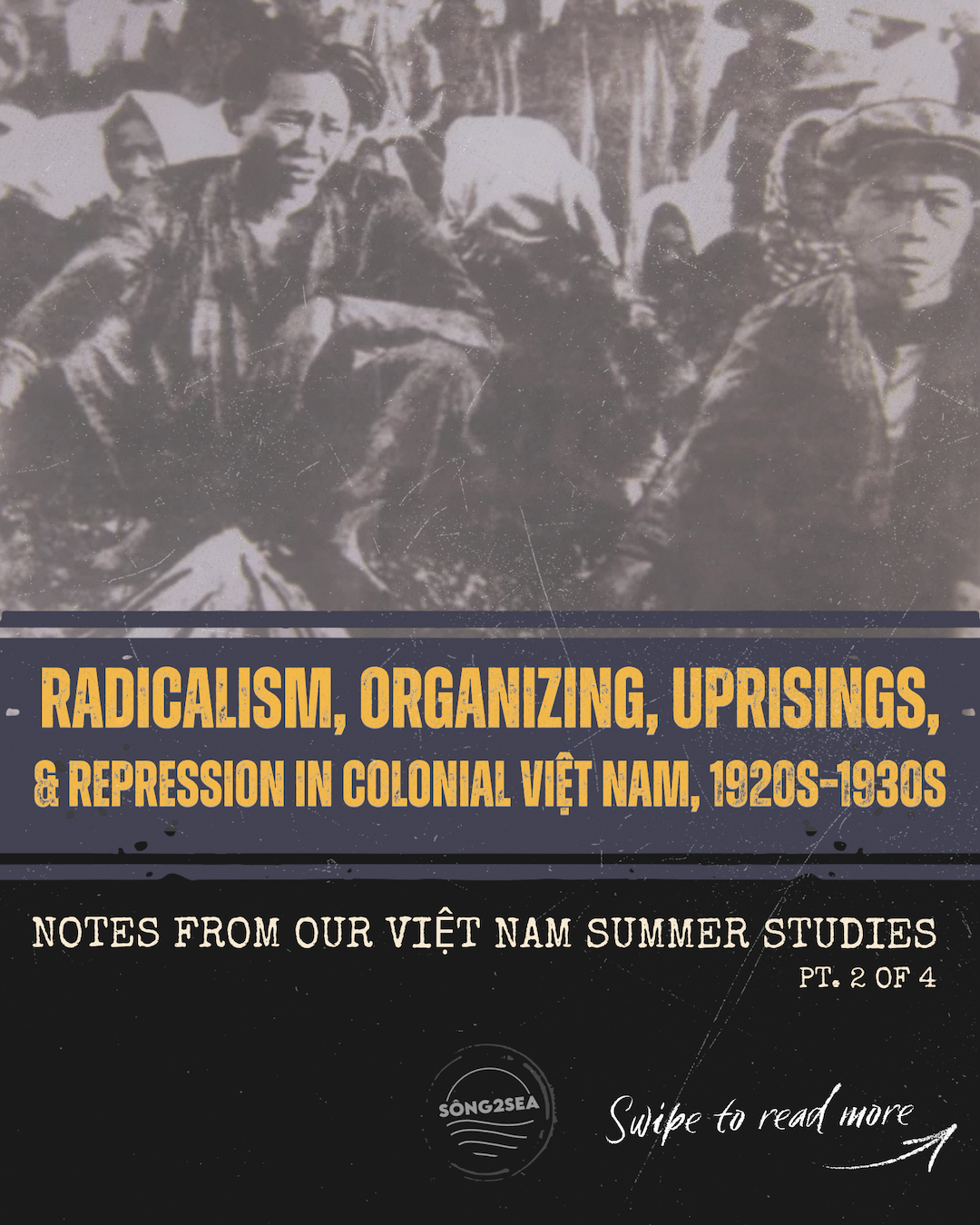
Radicalism, Organizing, Uprisings, and Repression in Colonial Việt Nam, 1920s–1930s
A generation of young people who were introduced to anticolonial politics through radicalism, which historian Huệ-Tâm Hồ Tài defines as a reaction to both colonial rule and to Vietnamese accommodation to that rule, without necessarily following a specific ideology.
This radicalism gained momentum in the mid-1920s when hundreds of young, mostly urban Vietnamese traveled abroad to find ways to free themselves and their nation.
They shared the same goal of ending French rule, but their circumstances and the repression they faced took them down different paths.
Let’s take a look at three currents of anticolonial politics during this period.

Colonial Việt Nam and the Rise of Revolutionary Consciousness, 1920—1930
The French conquest of Việt Nam began in 1858 with an attack on Đà Nẵng. About 40 years later, France had established colonial control over what it called French Indochina, encompassing Cambodia, Laos, Guangzhouwan in China, and Việt Nam, which it divided into Tonkin, Annam, and Cochinchina.